I’ve had a lot of impressive little smartphones this year, from the Google Pixel 11 Pro to Vivo’s excellent X500 Pro. And after spending some time with several foldable devices and camera flagships, you might think another traditional slab phone would be boring. So the Xiaomi 18 Pro had a lot to impress, and well, it had me hooked… already.
I’ve only had the global model for a few days, but it’s already made a good impression. Between the beautiful build, useful rear display, and feature-rich HyperOS 4 experience, there’s a lot to explore here. The best part is that Xiaomi has managed to pack all of this into a relatively compact flagship.
With the global launch scheduled for November 17th in Paris, here’s what I’ve noticed so far.

I can’t get enough of this design
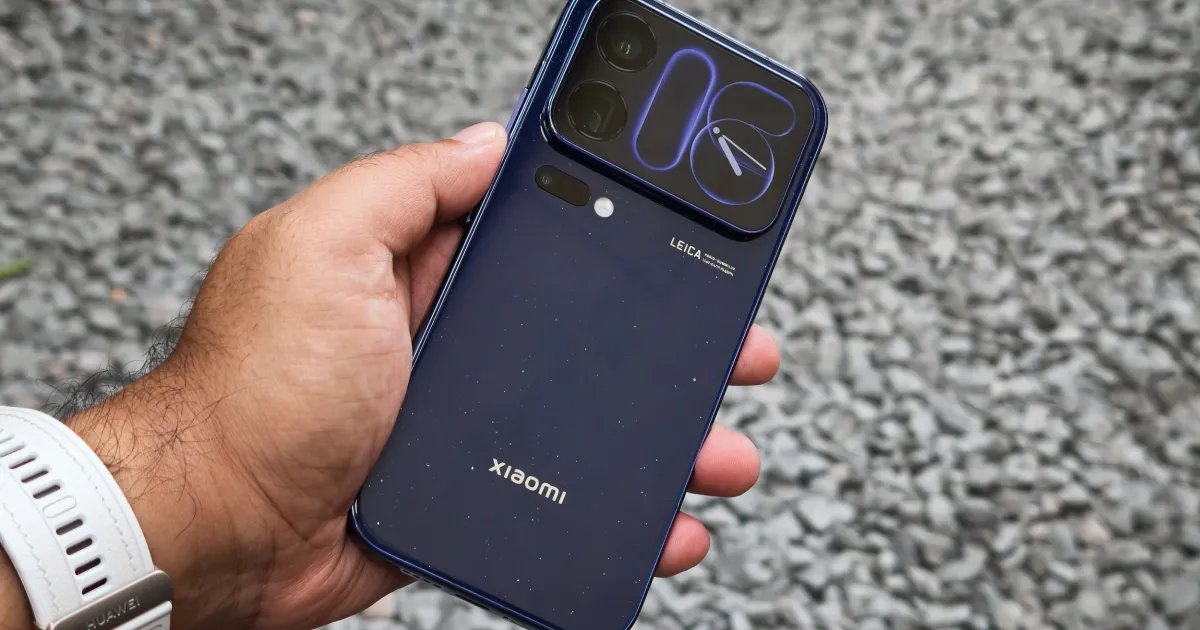
The first thing that caught my attention was the Cosmic Blue finish. In person it looks absolutely stunning, with a reflective glass back that feels almost silky and soft when you run your fingers over it. Xiaomi has combined this glass with an aluminum alloy frame, giving the phone a reassuringly high-quality build. I’ve recently started using the Vivo X500 Pro and while both are beautifully built, the Xiaomi has a noticeably different personality. It’s shinier, more eye-catching and stands out every time.
All this beauty comes at a price. The back is very susceptible to fingerprints and even the smallest specks of dust are noticeable in the right lighting. It’s also very slippery, but I refuse to cover the back with a cover. Fortunately, Xiaomi also includes one in the packaging in addition to a USB-C cable. There is no charging brick included in my European test device.

Its compact dimensions enable one-handed operation, but the weight is noticeable. It’s around the same 200 gram range as my Pixel 11 Pro, so it’s not as effortless to handle as the Vivo X500 Pro. The huge camera housing doesn’t bother me either. In fact, the integration of the secondary display into the module gives the back a striking appearance without making the whole thing look unnecessarily busy. The current iPhone Pros are the obvious inspiration, but they serve more of a purpose here.
It’s just nice to have that rear display
I’ve already seen secondary displays on smartphones, including Xiaomi’s previous flagship. However, after holding the 18 Pro for a few days, I’m starting to understand why Xiaomi continues to invest in the idea. The most useful application for me so far is simply photography.

I took a lot of selfies with the rear cameras, with the secondary display acting as a viewfinder. You can pose, adjust camera controls, and take a photo without relying on the traditional front camera. The user interface, designed for the tiny screen, is also surprisingly well done and feels quite intuitive.

Another practical use case was music control, where I had to interact with the rear display for quick control. I find it a little charming, even if it’s not particularly practical. Sometimes it’s just easier to work with a larger screen. There’s also Lumi, Xiaomi’s animated companion, which I’m particularly keen to explore further. I haven’t spent enough time on it to give a meaningful opinion.

So far the rear display has already proven useful through the camera alone, and I’m excited to see how much more it can do in everyday use.
HyperOS 4 has a few new tricks
Xiaomi’s HyperOS has always been one of the more customizable Android interfaces, and HyperOS 4 doesn’t deviate from that. You get plenty of options to personalize the phone, from themes and always-on display styles to fingerprint animations, lock screens, and other visual elements. Even during everyday navigation, the user interface feels fast and fluid.

Of course, Android’s iOS adaptation continues and Xiaomi seems pretty excited about the translucent Liquid Glass-inspired effects. They’re everywhere and I find this increasingly common aesthetic a bit tiring. Luckily, Xiaomi gives users a lot of leeway to customize the interface.
I was also pleased with Motion Assistant, which is one of my favorite additions to Android 17. It helps reduce motion sickness when using the phone in a moving vehicle, and it’s great to see Xiaomi keeping up with the useful quality of life features from Google and Vivo.

However, the notification bar and the quick settings bar are not my favorite. Just like many other brands, including Apple, these two are now separate. I’ve never enjoyed having to swipe from different sides of the display to access notifications and controls. Google’s Pixel user interface makes it easy to use. Even Vivo’s OriginOS offers users the option to choose a combined layout. I wish Xiaomi would offer the same flexibility. Regardless, you can probably adjust everything else around it to suit your mood.
A beautiful display that provides more privacy
The main display is another big highlight. The bezels are remarkably thin and symmetrical, giving the phone a clean, almost edge-to-edge look. It’s a true flagship panel that checks every premium box. However, Xiaomi’s Privacy Display is the real star here.

Similar to the Samsung Galaxy S26 Ultra, the Xiaomi 18 Pro can limit people’s view when they look at the display from an angle. But Xiaomi’s implementation is slightly different. In my initial experience, the Privacy Effect seems to be less aggressive than Samsung’s, but it also preserves more of the perceived color saturation and clarity of the display when enabled. I actually find this trade-off worthwhile, although I need more time on both implementations before I can draw any final conclusions.

Leica cameras make me excited for what comes next
Xiaomi has also packed some serious camera hardware into this relatively compact phone, including a 200-megapixel main camera and a 200-megapixel telephoto lens with a 75mm focal length. The telephoto lens’ large 1/1.56-inch sensor is what excited me the most. There are differences from the larger Pro Max, including the lack of LOFIC technology on the smaller model, but I’ll save those comparisons for the full review.

At the moment I’m having fun exploring the Leica camera’s interface. Having previously used the Xiaomi 15 as my daily vehicle, I always appreciate the character that Xiaomi brings to its photography. The Leica filters are still some of my favorites and that makes the new Leica Original shooting style a new toy to experiment with. It sits alongside the Leica Vibrant and Leica Authentic and offers a different interpretation of color without the pronounced vignetting that might put some people off the traditional Leica aesthetic.
I also really want to spend more time with Essential Mode. There’s a lot to explore here and you can wait for our full review to find out all the juicy details.

I can’t wait to spend more time with it
It’s still early days with the Xiaomi 18 Pro, and there are a few things I haven’t fully evaluated yet, including sustained performance, battery life, charging, and the full camera experience. With the Snapdragon 8 Elite Gen 6, everyday interactions have felt wonderfully responsive so far, but I’ll reserve any conclusions about performance until I’ve completed my testing.
What I can say is that Xiaomi is already making me want to rush through other reviews to test its latest compact flagship on a daily basis. And for another traditional smartphone in an increasingly crowded flagship market, that level of excitement strikes me as a rare achievement.