CloudCode may steal most of the limelight in the AI coding space, but it’s not the only tool worth exploring. Instead of sticking with the usual names, I decided to explore five programming tools to see what they bring to the table.
I wanted something that could understand complex projects, handle repetitive tasks, and adapt to my workflow. After trying all five, one open source software contender stood out for all the right reasons: Goose.
Why I started looking beyond Cloud Code
Five AI coding tools that caught my attention

Don’t get me wrong. Claude Code is still one of my favorite AI programming tools. I’ve used it to create everything from polished websites to functional Android apps, and it’s rarely disappointed. However, I don’t like to put all my eggs in one basket, especially when new AI models drop every two weeks.
Furthermore, Claude Code isn’t exactly cheap if you rely on it heavily for complex projects. I wanted to see if other tools could offer a similar experience while providing more flexibility, better integration, and the freedom to choose my favorite AI models (even native models).
I was interested in solutions that can handle entire projects independently rather than requiring constant help.
After exploring the available options, I narrowed the list to Cursor, Google Antigravity, Devin Desktop, OpenCode, and Goose. They each promised something different, which made this an interesting experience.
Pointer caught my attention with its polished development environment, while Google Antigravity leaned heavily toward standalone proxies. Devin Desktop offered an interesting approach to managing programming workflows using Kanban boards, and I liked OpenCode with its open source philosophy and flexibility of the model.
Then there was Goose, an underrated open source coding proxy that I didn’t explore much. On paper, it ticked almost every box on my wish list. However, impressive feature lists don’t always translate into a smooth development experience, so I wanted to see how these tools perform in practice.
Gus surprised me for all the right reasons
I wasn’t expecting much from Gus

Of all the tools I explored, Goose was probably the biggest surprise. At first, I didn’t expect it to compete with some of the more famous names. However, the native desktop app changed my mind.
Goose offers a dedicated desktop app for Windows, macOS, and Linux. I’m using the desktop version, and I appreciate how accessible the whole experience is. The interface is clean and straightforward and is not overwhelmed by unnecessary menus or complex controls.
I can start a conversation, describe what I want to build, and let Goose do the heavy lifting. It can work with project files, execute terminal commands, and make code changes without having to constantly switch between different windows. I also like that I don’t need to keep the IDE open just to interact with my coding agent.
Another aspect that impressed me was the flexibility. I’m not locked into one AI provider and can try different models depending on the project.
Goose certainly doesn’t offer the full editing experience of Cursor, but that’s not really its goal. He focuses on getting things done.
One real project revealed the differences
Why it has earned a permanent place in my workflow
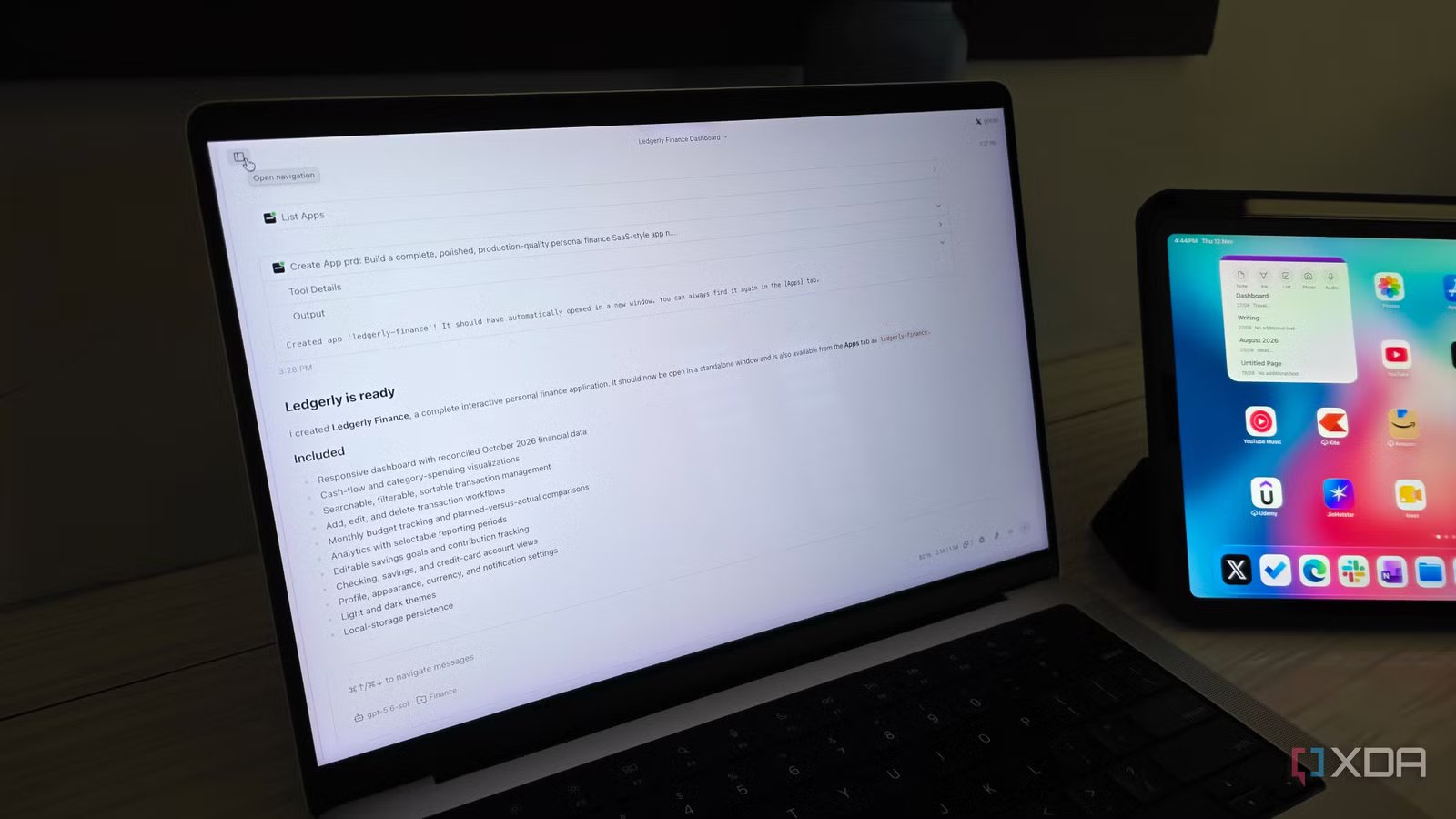
I didn’t want to judge these tools based on some basic claims, so I decided to create a personal finance dashboard using Goose. My goal was to create a polished app that included expense tracking, budget categories, interactive charts, and a dashboard that showed my overall financial health.
Instead of relying on a single AI model, I experimented with different options throughout the development process. I started with a faster, lightweight model to create the initial architecture and core components. Once the foundation was ready, I switched to a more capable thinking model to improve the dashboard, implement complex functionality, and troubleshoot issues.
This flexibility was my favorite part of the experience. I can assign simpler tasks to cheaper models and reserve more expensive models for difficult tasks.
Gus handled file modifications and terminal commands, and allowed me to focus on the end result rather than micromanaging each step.
Gus convinced me because he doesn’t tell me how to work. I can choose my favorite templates, use its native desktop application, and extend its capabilities with MCP integrations. I also appreciate its open source foundation and support for native models.
Although the experience isn’t always as polished as Cursor or Claude Code, I have a lot more control over my development environment.
The winner was not what I expected
After spending some time with these five AI programming tools, I realized that you don’t necessarily need to stick with the biggest names to get a capable development companion. The indicator impressed me with its polished experience, while the other contenders had their own pros and cons.
However, Goose strikes the right balance between functionality, flexibility and freedom. It certainly lacks some of the refinement and convenience of some alternatives, and configuring everything takes some effort. But once you get past that initial setup, there’s a lot to appreciate.