
Bitcoin (BTC) on-chain transaction data is pointing to the start of a new uptrend as long-term holders pull back from selling.
Important Points:
- The percentage of bitcoin’s realized cap of coins inactive for 18 months or longer has remained broadly stable since mid-September, falling from 26.98% to 26.59%.
- CryptoQuant’s analysis shows that the group’s long decline in on-chain activity coincided with the onset of previous bitcoin bull markets.
- Coins that last moved at least five years ago have about 34,000 BTC in monthly onchain volume – half of that by 2024.
The dormancy of older coins points to the “early stages” of a bitcoin bull market.
Data from the Onchain Analytics Platform CryptoQuant Shows that investors who have held coins for 18 months or more are starting to become less active.
On September 16, the partner’s share of realized cap over 18 months — the value of all coins at the price they last moved on Anchain — reached 26.98%, the highest since mid-November 2024.
Analyzing the data, CryptoQuant sees a historical trend that is now repeating itself before Bitcoin bull markets.
“The pattern has always been the same: when the proportion of bitcoin held across the network rises for more than 18 months and then starts to fall, a strong rally follows,” he wrote in one. Blog post.
It included a chart of UTXO (unspent transaction output) edgebands, sized according to their contribution to the received cap.
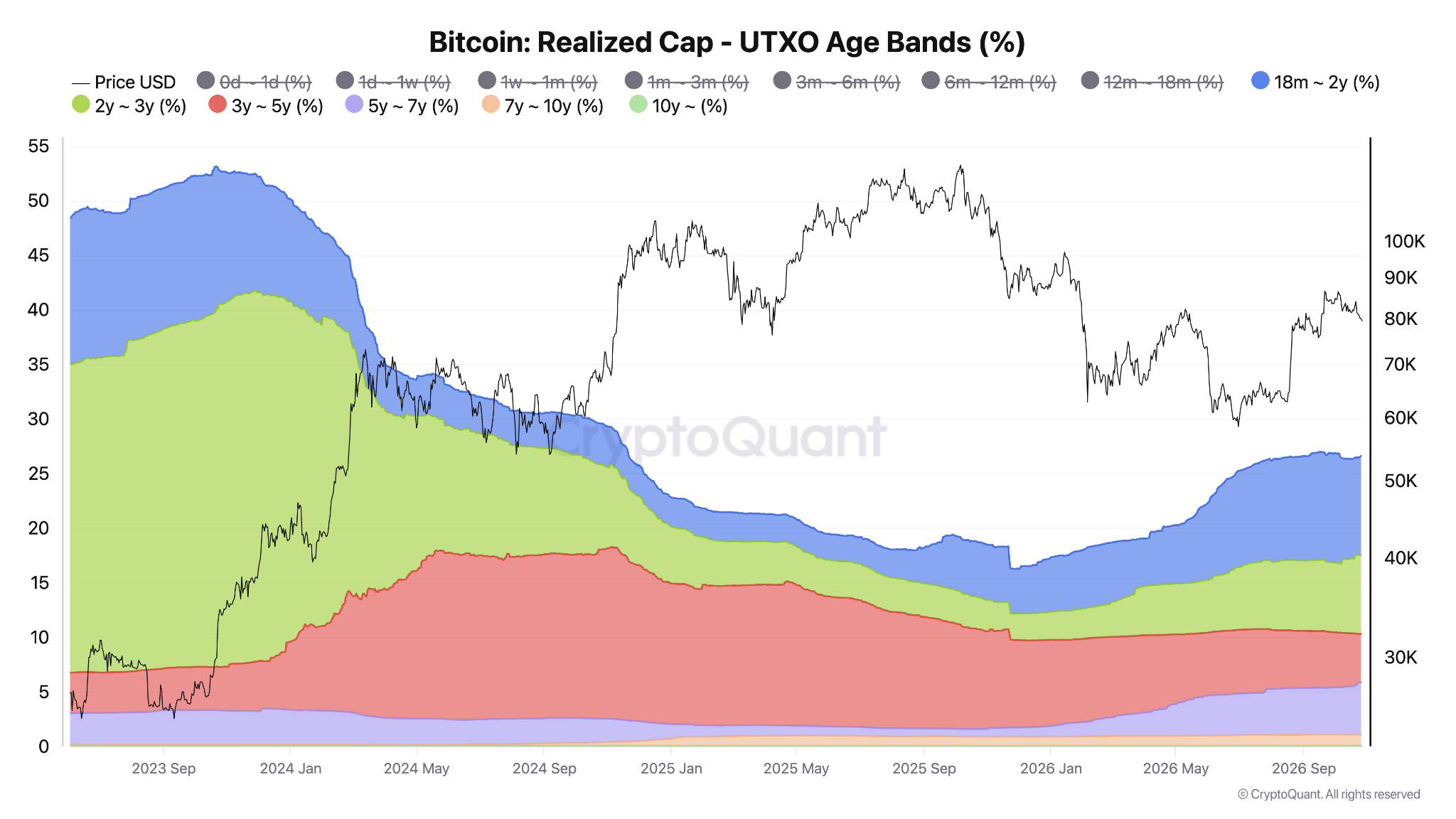
UTXO Age of Bitcoin Realized Source: CryptoQuant
Low on-chain spending by long-term investors reflects a move to maintain exposure to BTC to maximize returns over the long term. These investors contributed to a broader trend that began in November 2025, with increased profit-taking activity as BTC/USD fell further from its current all-time high of $126,200.
CryptoQuant noted that the UTXO trend reversal remains modest, indicating that the market is only seeing the beginning of more bullish conditions.
“The market has now turned into a bullish cycle, but we still appear to be in the early stages of the cycle, where such a signal has not yet begun,” he commented.
“This looks like a point where we can be positive about both potential upside and the duration of the rally.”
Bitcoin’s decline from an all-time high is still the lowest on record.
Among long-term holders, only the 18-month to two-year group is currently in a net loss, with a cost basis of $93,193. Its cost basis is currently $93,193.
Related: BTC Price Risks $80K Loss at FOMC, Earnings: Three Things to Know in Bitcoin This Week
Since the all-time highs of 2025, Bitcoin has fallen below the group’s cost base, while older groups have been in gross profit. The year 2026 thus marks the first bear market in which the price remains above a 2-3 year cost base, CryptoQuant reveals.
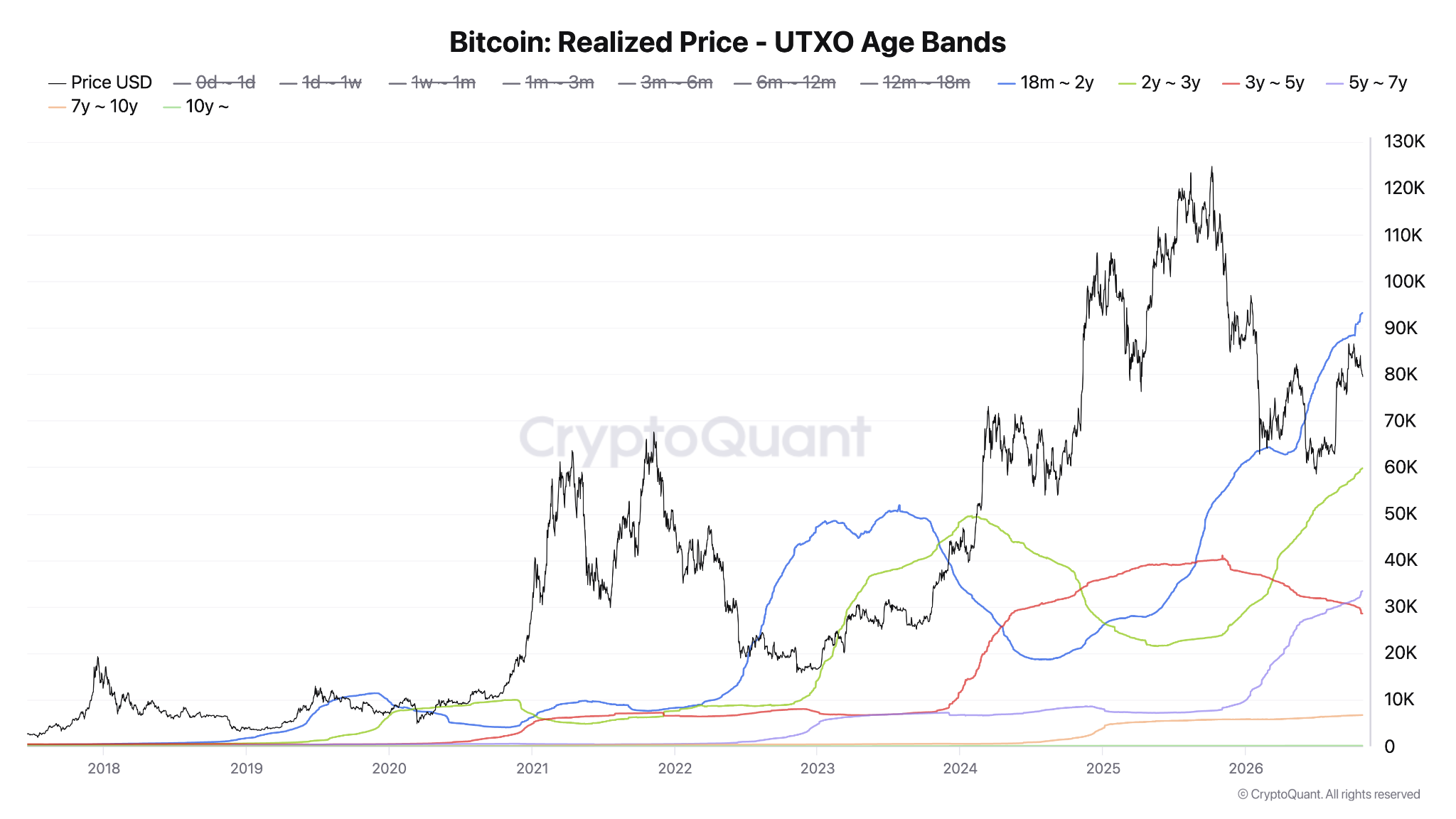
UTXO Age Estimated Bitcoin Price. Source: CryptoQuant
In one Report Released last week, crypto investment company Galaxy Digital described the “lowest” bear market on record, with a maximum drawdown versus an all-time high of -53%.
BTC has been in custody for five years or more, during which time — Galaxy says the coins that were responsible for the supply crunch that stalled the price at $126,200 — are now supporting the case for a long-term rally as well.
“Coins without moving for five years or more moved 67k BTC a month in 2024 and 47k in 2025… a total of 1.11 million BTC since October 2024, the largest old coin distribution of any cycle, much of it absorbed by spot ETFs and BTC,” the digital asset companies wrote.
In 2026, the volume delivered by the five-year-plus group averaged 34,000 BTC per month, half of what it was in 2024.
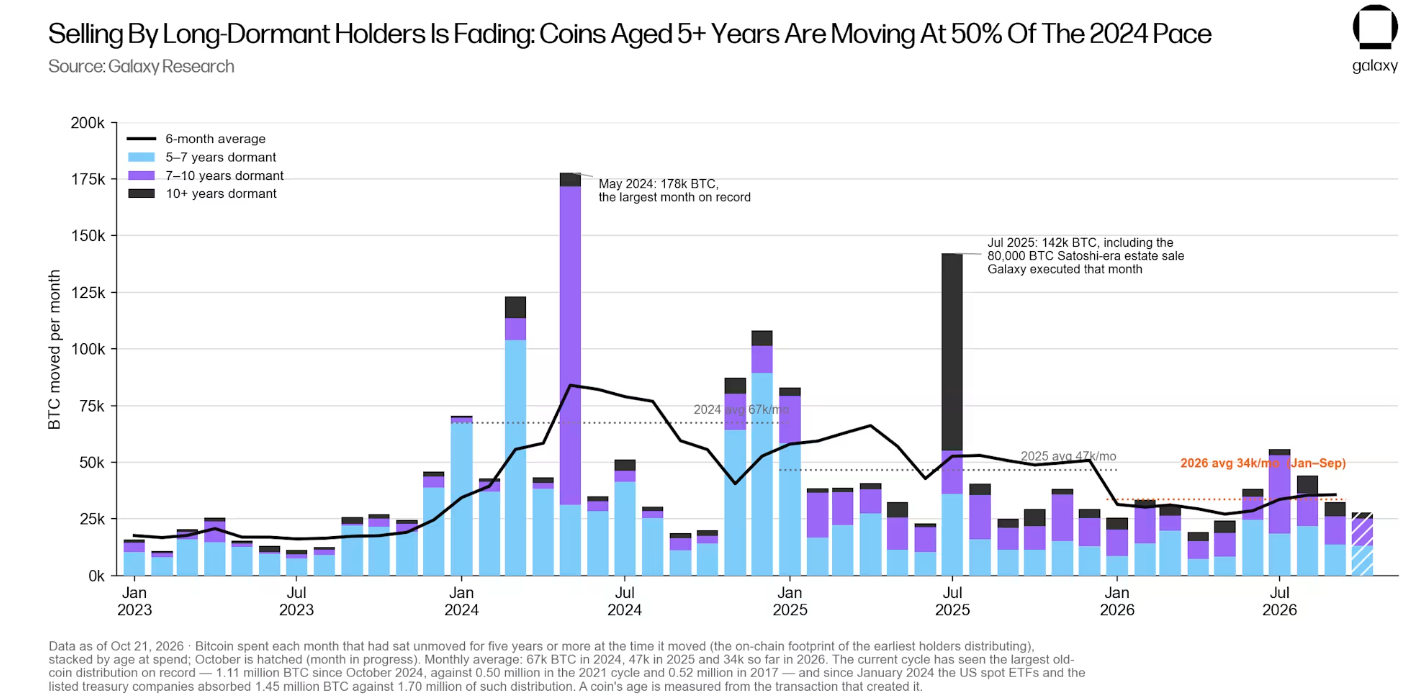
Five years of passive BTC supply UTXO data (screenshot). Source: Galaxy Digital