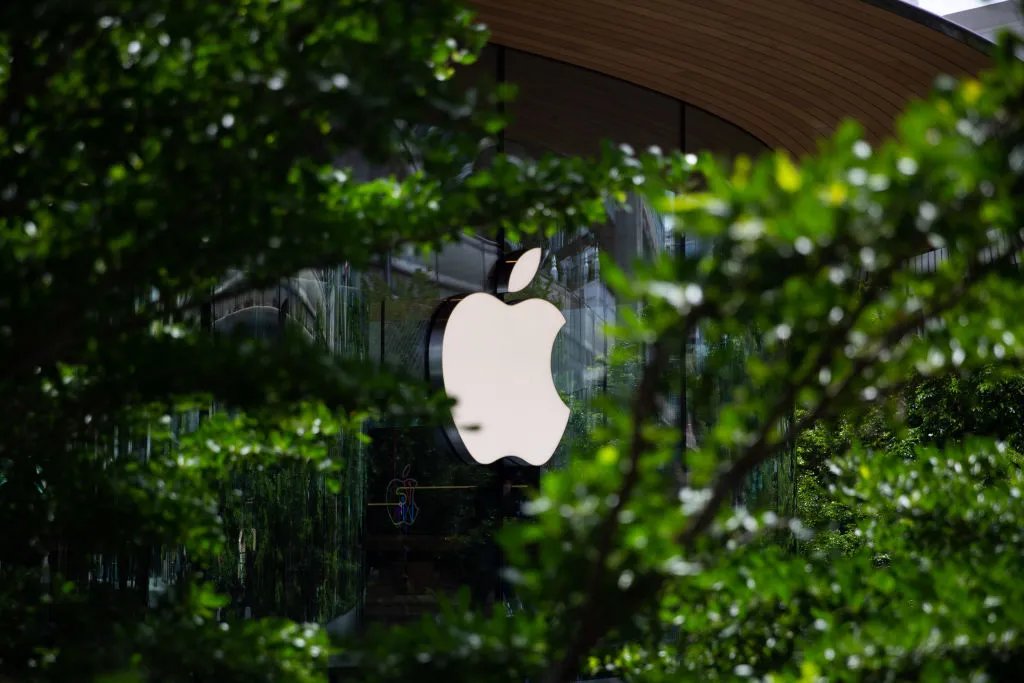
As Silicon Valley spends billions to get AI agents to shop for us, the man who pioneered Apple’s retail stores thinks the industry is overestimating how much of the shopping people will entrust to machines – and believes physical stores will continue to thrive.
Ron Johnson, 66, has heard predictions about the demise of physical retail before. He joined Apple in 2000 to expand its retail business as online shopping began to take off, and later helped create a network of stores that has become essential to how Apple sells its products and connects with customers.
“AI is a new technology that will improve the online shopping experience,” Johnson said in an interview. “But I don’t know if it’s going to change the way we shop.”
Johnson’s view comes as some of the world’s biggest tech companies try to push AI deeper into shopping, betting that agents can further automate the way we find and buy items — a concept commonly known as agent commerce. Google is making this effort with its Universal Commerce Protocol, a standard designed to help AI agents accompany consumers from product discovery to payment. OpenAI, meanwhile, turns ChatGPT into a shopping destination where users can search, compare, and in some cases even buy products without leaving the chatbot.
Asked if he could imagine someone letting an agent pick and buy a $1,000 or $2,000 laptop without ever visiting a website or store, Johnson was unequivocal: “Honestly, no one will do that.” »
Buying a laptop, he argued, is too personal a purchase to simply delegate to an AI agent. Buyers want to feel its weight, see the screen and decide which size is right for them. AI could narrow down choices, Johnson told TechCrunch. He added that many consumers would still like to experience the product themselves before spending so much money.
“AI will never be able to make you physically experience a product,” Johnson said. Instead, he expects agents to better inform consumers before they enter a store. “They will just become more informed shoppers when they come to the store.”
Johnson’s conviction stems from a decision Apple made more than two decades ago. Apple’s physical stores, he said, were designed not just as places to buy Macs, but also as places where people can try products, learn how to use them and seek help if they have problems.
Some of these bets are revisited in “Shop differently: How retail revealed Apple’s genius“, Johnson’s new book about building Apple’s retail operations alongside Steve Jobs. Competitors, he said, borrowed Apple’s heavy glass design, open layouts and even versions of the Genius Bar, but often missed the people.
“Apple’s secret sauce has always been its employees, the people in the store and how they treat the customer,” Johnson said.
Apple Store employees are not paid on commission, Johnson said, unlike the sales culture common in much of retail. The idea, he said, was to remove the sales pressure and let employees figure out what the customer actually needed.
After leaving Apple, Johnson took over JC Penney in 2011 with an ambitious plan to reinvent the struggling department store chain. He was ousted less than two years later, after sales fell.
Johnson now says he tried to change too much, too quickly, without involving employees and customers. Apple Stores was actually a startup that evolved alongside the company’s products. JC Penney, on the other hand, was a turnaround that required a different approach.
“I applied a startup mentality to what was supposed to be a turnaround transformation,” he recalls.
Johnson then returned to the startup world by founding Enjoy Technology, an e-commerce company that brought technology products and setup services directly to customers’ homes. The startup filed for bankruptcy in 2022 and sold almost all of its assets to Asurion.
For all his skepticism about how AI will reshape shopping, Johnson remains optimistic about the technology itself. “I really believe in AI. I’m an AI optimist,” he said.
He thinks Jobs would also have embraced AI, but not as a substitute for human judgment. “Nothing can replace human intuition,” Johnson said, recalling Jobs’ belief in bringing smart people together to debate problems and find new ways to approach them.
When you purchase through links in our articles, we may earn a small commission. This does not affect our editorial independence.