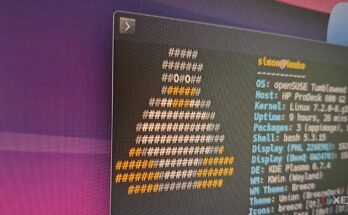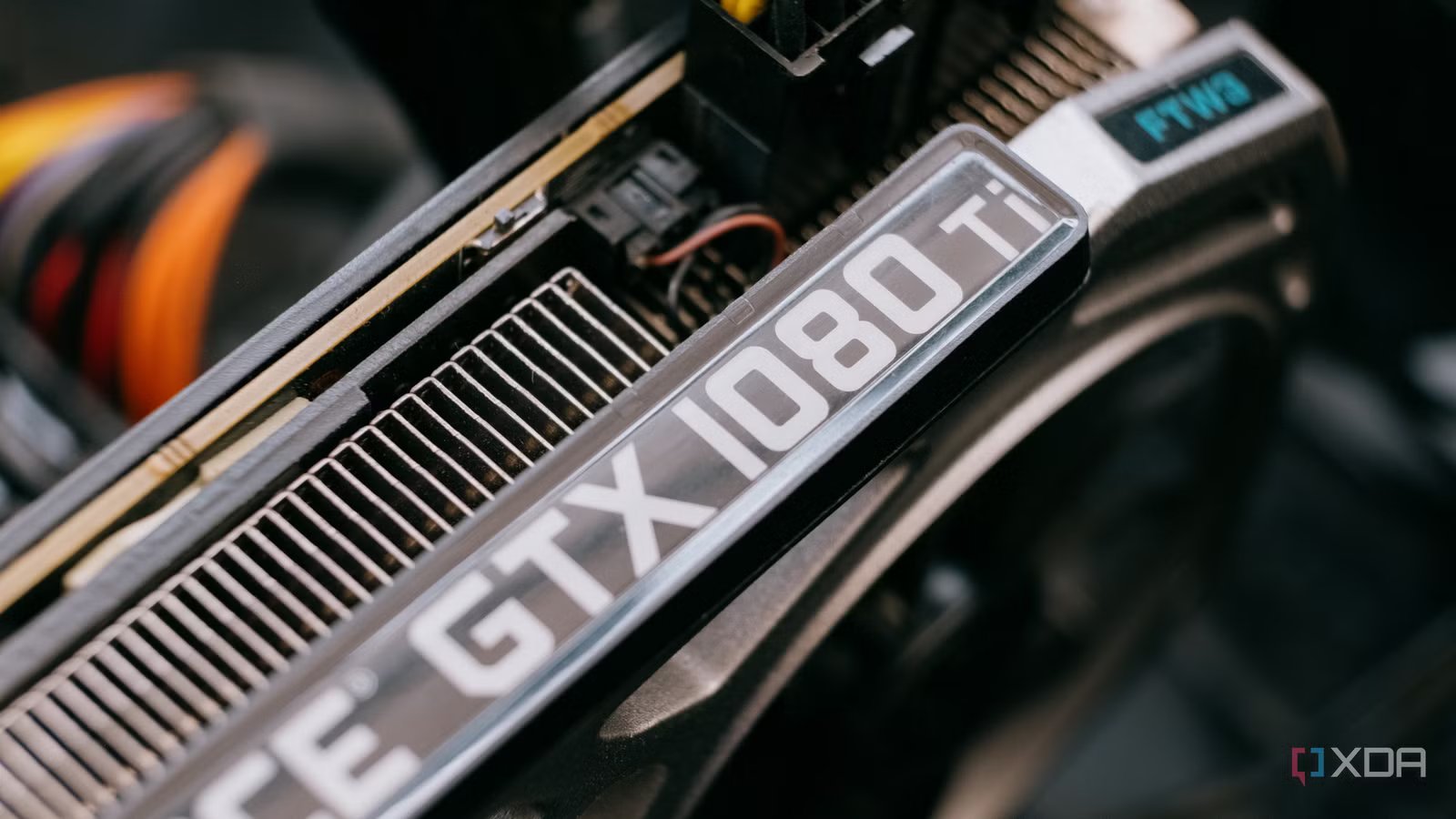
Since I have an RTX 4090 in my PC, you would think I would have a hard time going back to the GTX 1080 Ti. But I still have my old computer at my parents’ house, and this card hasn’t given me any reason to replace it yet. For the weekend I spend there, it’s more than enough for the games I play regularly without feeling like I’m missing out on much. The only upgrade I made for this version was the CPU. When I upgraded to the 9800X3D this year, I moved my 5800X3D over to my old PC, which improved my lows by 1%.
Of course, a faster CPU won’t make an almost decade-old GPU perform as if it’s half its age. I’m still dealing with a graphics card that doesn’t support DLSS or hardware-accelerated ray tracing, so I have to compromise and rely on workarounds to get decent performance from it in newer games. But getting to this point isn’t difficult, which is why I still feel like I can get a few more years out of this legendary GPU.
A dial in settings and accuracy goes a long way
But you probably saw this coming from a mile away

The GTX 1080 Ti, when it launched in 2017, was considered a 4K GPU. Fast forward to 2026, and I wouldn’t be comfortable calling it a 1440p card. Sure, some titles are still playable at 1440p, but the word “playable” does a lot of the heavy lifting here. And let’s not forget that it performs almost on par with the RTX 3060 12GB. So, 1080p is what I consider the sweet spot for this GPU, but even then, there are some newer AAA titles like Assassin’s Creed: Shadows It can struggle to reach 60fps even on low settings.
If I know a game is demanding, I usually start at 1080p/low and work my way up from there depending on the frame rate I get in MSI Afterburner. I found that I could often get away with improving texture quality, thanks to the 11GB of VRAM. Shadows, reflections, and volumetric effects are GPU-intensive, so I keep them low unless I’m getting close to 100fps. I turn up the CPU-heavy settings like crowd density and drawing distance, because I know my 5800X3D is still lag-free.
Sometimes, leveling up is non-negotiable
No DLSS? No problem!
Nvidia may have abandoned the GTX 1080 Ti behind RTX-era features like DLSS, but that doesn’t mean upgrading is a no-go. I can still use AMD’s FSR 3.1 in supported titles to improve my frame rates. This is what I did to get to 60fps Assassin’s Creed: Shadows. However, I stick with FSR quality, because I don’t want to run my game internally at a resolution lower than 720p. FSR 3.1 actually looks worse than DLSS 4.5 on my RTX 4090, so the last thing I want is to sacrifice more image quality, especially since I’m playing at 1080p instead of 4K.
Even if the game doesn’t support FSR, I have no options. For example, I use Lossless Scaling for both scaling and framebuilding when the game lacks native support. Also, if the game only supports DLSS, I would use OptiScaler to replace it with FSR or XeSS. I’m sticking to upgrading multiplayer shooters and using frame generation over slower single-player games as long as I’m getting at least 50fps locally. I know those extra frames don’t improve responsiveness, but I still like the extra smoothness when I’m focusing on the story.
The GTX 1080 Ti is too old for some games
This list will grow, but I’m not trying to play every new release

The GTX 1080 Ti was launched a year before Nvidia introduced hardware-accelerated ray tracing with its RTX 20-series GPUs. This puts it at a disadvantage after nine years, and there is no workaround because it simply does not have the necessary hardware. Some games like Indiana Jones and the Grand Circle and Death: The Dark Agesrefuse to run without a graphics processing unit (GPU) that supports hardware ray tracing. I’ve never bothered playing these games even on my RTX 4090, so it’s not a big deal, but I think this list will grow over time.
But I don’t try to play every new game released on a GPU that’s almost a decade old. There’s a reason I installed it on my second computer. I just want something that can handle the games I play regularly when I visit my parents. I mostly play first person shooter games Valuation and Battlefield 6For that reason, this card still gets the job done. In fact, I get about 80 fps on average Battlefield 6 At 1440p/low resolution without any upscaling or frame creation. But since I like to aim for 100+ FPS in multiplayer games, I’m still sticking with 1080p. I’ll worry about compatibility when games I enjoy force me to upgrade.
I’ll give it up at some point, but not yet
After all, this is a 2017 GPU, so running into limitations nine years later shouldn’t surprise me. However, since its raw performance is roughly on par with the RTX 3060 12GB that Nvidia brought back this year, I don’t see a reason to upgrade just yet. I’m sure I’ll move my RTX 4090 to this version when I upgrade the GPU on my main rig, but I don’t see that happening anytime soon, especially at current street prices. Right now, the GTX 1080 Ti isn’t giving me any problems, and that’s all that matters.