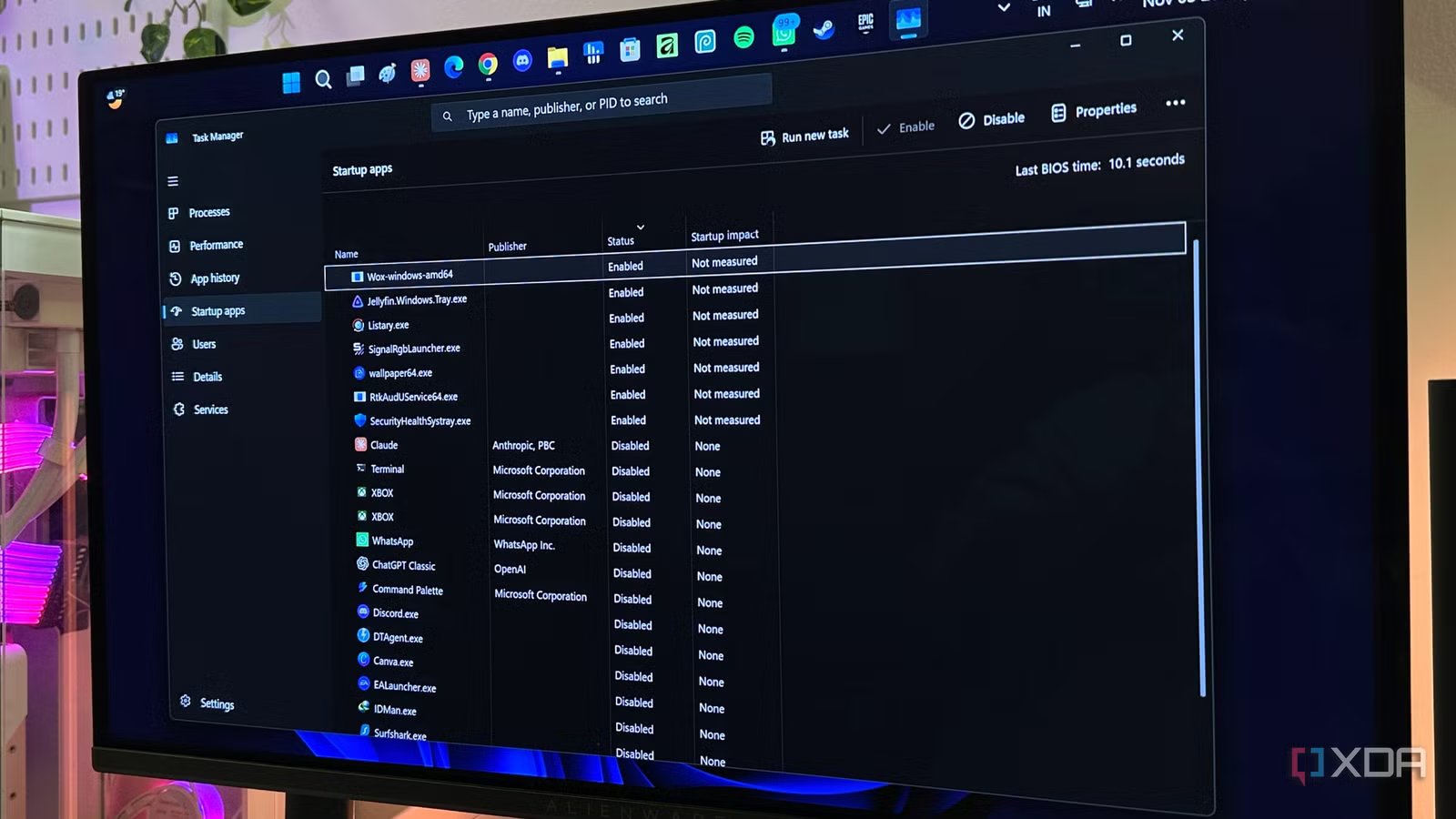
The Startup tab in Task Manager is a very convenient way to specify which applications to launch when you log in. وهي مفيدة جدًا عندما تحاول تنظيم نظام Windows وتسريع جهاز الكمبيوتر الخاص بك. ومع ذلك، هناك مشكلة. The Task Manager doesn’t actually show you everything that’s running in the background, and trust me, it’s there a lot.
That’s why relying exclusively on the task manager can leave you with an incomplete picture of what’s happening on your device. If you’ve ever wondered why some applications keep launching even though startup entries are disabled, you’ve probably been looking in the wrong place.

Before you blame Windows for mysteriously running background apps, one place you should always check is in the Task Scheduler. Many modern software developers have discovered that they don’t need to register an application with a traditional startup site to get it to run when they log in.
Alternatively, they can create scheduled tasks that run automatically when you log in, easily bypassing the Startup tab in Task Manager. للتحقق من برنامج جدولة المهام، اضغط على Win + RHe writes taskschd.msc

. ابحث عن أي مشغلات تحمل علامة – هذا ما يشير إلى أنه يمكن تنفيذ المهمة عندما يقوم المستخدم بتسجيل الدخول. Chrome, Edge, Teams, Adobe, and OneDrive components are among the most popular here that may use scheduled tasks to run in the background.
ومع ذلك، تذكر أنه ليست كل مهمة مجدولة هي تطبيق بدء تشغيل غير مرغوب فيه. يتم تشغيل بعضها بشكل دوري أو فقط عند استيفاء شروط محددة. verify
Windows services and startup folders have their own startup mechanisms

The Task Scheduler isn’t the only place Windows hides . Many installed applications rely on Windows services to run processes independently of whether you have already opened the associated program or not.
Win + R services.msc He enters To open Services Console. فرز القائمة حسب
Unlike traditional startup applications, these services can start while Windows is booting or shortly thereafter, often without appearing in the Startup tab of Task Manager. However, do not disable unfamiliar entries just because their names seem suspicious. Windows relies on hundreds of background services, and breaking the wrong one can cause much bigger problems than just a few extra processes.
Win + R shell: startup To scan your personal startup folder. For entries that apply to everyone who uses the computer, enter shell: common startup instead of. ربما تفاجأ بما كنت تتجاهله.
Dig a little deeper into the actual Windows startup configuration
PowerShell and Registry Editor detect startup entries that Task Manager ignores
Aside from doing all the digging yourself, you can also have Windows do a lot of the investigating work for you. PowerShell has a handy command that consolidates all the traditional startup entries into a nice, readable list. Launch PowerShell and type the following –
Get-CimInstance Win32_StartupCommand | Select-Object Name, Command, Location, User | Format-List
This pulls startup entries from registry boot keys and startup folders across user and device contexts. the name He orders The feature tells you how to launch it. the location and user The properties help you understand which account is associated with it. If you’re a single user on your computer, this last part is largely redundant.

Registry Editor even shows you exactly what’s running in the background of your computer, provided you know where to look. Primarily, there are four locations within the Registry Editor that can provide a convenient list of all the applications that are secretly preparing themselves to auto-start with Windows. فقط اضغط Win + R regedit To open then type the following addresses one by one to see which apps are trying to jump the fence without knocking on the gate first.
Computer\HKEY_CURRENT_USER\Software\Microsoft\Windows\CurrentVersion\Run
Computer\HKEY_LOCAL_MACHINE\Software\Microsoft\Windows\CurrentVersion\Run
Computer\HKEY_LOCAL_MACHINE\Software\Microsoft\Windows\CurrentVersion\RunOnce
Computer\HKEY_LOCAL_MACHINE\Software\Wow6432Node\Microsoft\Windows\CurrentVersion\Run
Among the entries that appear in these lists, you can simply select an entry that you do not like, or do not want to start without your explicit permission, and then right-click and delete the entry. This will not delete the program from your computer, but it will prevent it from automatically running with Windows the next time you turn on your computer.
And keep it in an accessible place.
Autorun also shows you what Task Manager rejects
When the tools built into Windows aren’t enough, Microsoft has actually created a better one

If you want the closest thing to a complete inventory of everything that starts with Windows, Microsoft’s Sysinternals Autoruns is the tool to use. Not only is this utility limited to a few familiar startup locations, it actually digs through boot keys, scheduled tasks, services, drivers, Winlogon entries, Explorer extensions, and many other places where the program can quietly locate itself.
Download and run Autoruns, then get started Unpaid invoice. قد يبدو الأمر مرعبًا بعض الشيء في البداية لأنه يظهر لك definitely . You can also dig deeper and search for a specific application, examine where it has registered itself correctly, and uncheck the entry to prevent it from running without immediately deleting its configuration.
ومع ذلك، فإن كلمة “الفحص” هي كلمة مهمة جدًا هنا. AutoPlay exposes a lot of legitimate Windows components that you shouldn’t disable just because you don’t recognize them or know what they do. If you’re not sure what entry you’ve noticed in AutoPlay, the best course of action is to check it publisher, a description, Image path