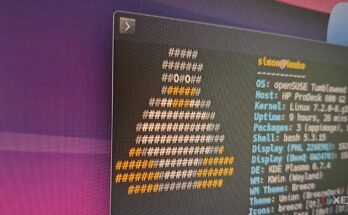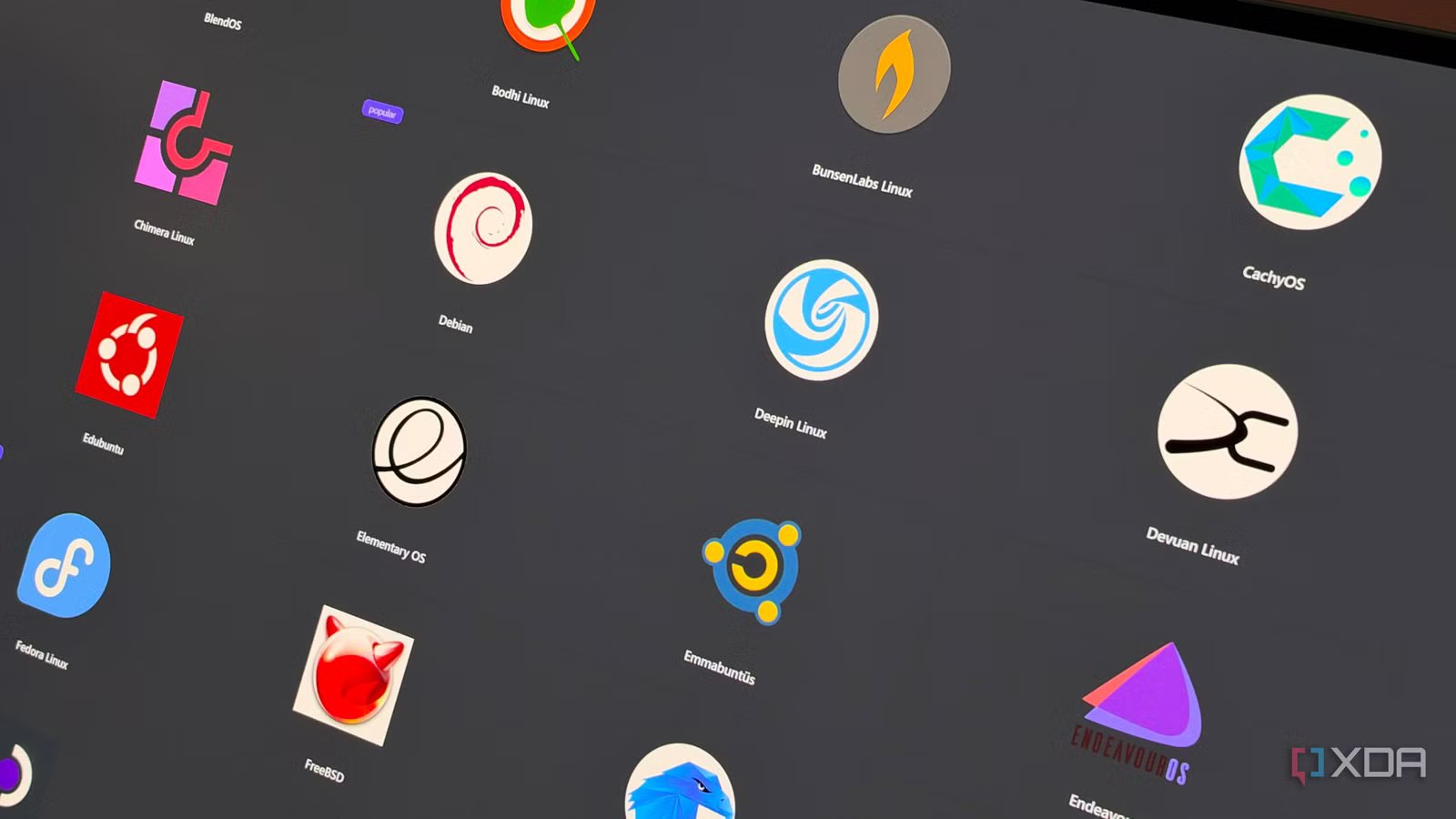
The first question asked by a Windows user switching to Linux is which distro to install, and for many years, this has been the right question. It used to determine whether your Wi-Fi card would work or your games would run on the first try, but now it’s lost a lot of its weight, and I think that’s a good thing.
I’ve run many Linux distributions on my desktop over the years, and settled on CachyOS for a variety of reasons, but most of them are niche and specific to me. For someone who sees Ubuntu or Fedora and thinks they look comfortable and welcoming, the best experience they can get in those distributions can certainly match mine, the only difference nowadays being the default settings, most of which can be easily changed. This shift, more than any improvement in any single distribution, is what gives 2027 a real chance of being the year Linux goes mainstream.
The parts you actually use are pretty much the same everywhere
Linux has most of what you need regardless of the distro
Most new users will interact with parts of Linux that do not belong to a single distribution. Flathub is a great example of this, which acts as a shared app store across distributions, so the same version of Firefox, OBS, or Discord is installed and behaves the same way on Fedora, Mint, or an Arch derivative.
For gamers, Steam goes even further by adding Proton, a compatibility layer that gives a Windows game a uniform set of libraries no matter what distro it runs under. If you go to run something like this Cyberpunk 2077 On a machine running Ubuntu and then a machine running Vanilla Arch, as long as they both have the appropriate GPU drivers, they should work and behave the same way.
The host distribution mostly supplies the kernel, graphics drivers, and basic services such as sound. On AMD and Intel machines, even the GPU drivers are the same raw kernel and Mesa code everywhere; Distributions differ mainly in how recent the version is shipped. Add to this the fact that many distributions today support either KDE Plasma or GNOME, and what a newcomer might think of as an “operating system” is largely a common experience across dozens of distributions.
There are still variations in daily distributions that I encounter, but they have become less common over the years. For the small computer I’m running Ubuntu 26.04, Snap is the primary package format. It’s the default for installing software, and the App Center lists Snap and Deb packages but leaves Flatpak out for you to add yourself. In CachyOS, the operating system on my main workstation, you’re directed toward pacman and the broader Arch ecosystem, but you can easily install AppImages as well.
Probably not many users will choose the distro
The valve may be the reason for this

Perhaps the biggest shift we may see is that distribution selection is made before the user even enters the picture. Launching at the end of June 2026, Valve’s own Steam Machine runs SteamOS, and anyone who buys one gets Linux without ever hearing or seeing the word “distribution.”
SteamOS 3.8 has expanded this to DIY PCs with AMD graphics, which will help those who want to try it outside of their Steam hardware to do so. The scale is still quite modest, and the level at which other OEMs sell hardware with Linux as an installed operating system is still tiny compared to their Windows sales, but it is trending upward.
Why 2027 specifically?
Windows 10 is on its way out, for real this time

It’s been every year the Linux desktop year. It’s obviously just a running joke, but in late 2027, there may be a mass exodus from Windows 10 due to a lapse in extended security support. Microsoft recently extended the free consumer Extended Security Updates for another year, and coverage now ends on October 12, 2027. That makes late 2027 the real deadline for the large base of PCs that work fine but can’t officially run Windows 11, and unless Microsoft drops the system requirements that prevent these systems, it will be one of the best natural onramps for Linux we’ve seen in a while.
You probably still shouldn’t use dice in your hand
At least, not yet

Anti-cheat is the main hurdle brought up when it comes to Linux adoption by gamers, and it’s not unwarranted, but there is growth on this front. Epic announced the second version of Easy Anti-Cheat Linux in October 2026, with Fortnite as its first test. Epic hasn’t committed to a specific date, but if it arrives in 2027, it will only increase the optimism surrounding the platform.
However, with that said, this also happens to be a reason not to pick your distro blindly out of a hat. EAC Linux 2nd Edition requires secure boot and a signed kernel from an organization recognized by the major Epic, and this list covers big players like Canonical, Fedora, and Universal Blue distributions. My desktop won’t be a candidate, as CachyOS ships its own tuned kernel, so I won’t be able to play, although the developers behind CachyOS are building one. The Steam Deck doesn’t meet the requirements yet, though Epic says it’s talking with Valve to iron that out.
Then there’s Nvidia, which I’ve conveniently ignored so far. Getting full performance from your GPU still means using a proprietary driver, and each distro handles this a little differently. There are some distributions that provide custom installation images with Nvidia drivers, and others will install them automatically.
Choose based on support for things you already use
Choosing a distro being less important than ever is a big part of the reason why Linux will see real growth in 2027, and if you’re making the switch from Windows yourself, it’s never been easier. Pick a major distro that has the desktop environment you’re looking for, get your apps from its software store and your games from Steam, and stop thinking about it.